
What is the Entry/Exit System
The Entry/Exit System (EES) is an automated IT system for registering non-EU nationals who travel for a short stay when they cross the external borders of participating European countries. Short stay = up to 90 days in any 180 days across all EES countries combined. EES replaces manual passport stamps with a digital record of entries, exits and refusals of entry.
Where EES applies
EES is used at the external borders of these countries:
Austria, Belgium, Bulgaria, Croatia, Czechia, Denmark, Estonia, Finland, France, Germany, Greece, Hungary, Iceland, Italy, Latvia, Liechtenstein, Lithuania, Luxembourg, Malta, Netherlands, Norway, Poland, Portugal, Romania, Slovakia, Slovenia, Spain, Sweden, Switzerland.
For EES, a non-EU national means a traveller who does not hold the nationality of any EU country, Iceland, Liechtenstein, Norway or Switzerland.
Who must register
You are registered in EES if you are a non-EU national who either needs a short-stay visa or does not need a visa for a short stay. Your entries, exits and any refusals are recorded electronically.
Who is exempt
- Nationals of the participating countries, and of Cyprus and Ireland
- Holders of residence permits and long-stay visas
- Certain family members of EU/EEA/Swiss citizens who enjoy free-movement rights when accompanying or joining them
- People with specific privileges such as accredited diplomats, local border traffic permit holders, some rail crew members, and NATO personnel on orders
Benefits of EES
- Modern, efficient checks: Digital records replace stamps and help officers process travellers faster.
- Easier, faster crossings: Self-service options and the possibility to pre-enter information can reduce time at the border.
- Preventing irregular migration: Biometric checks help stop overstays and identity abuse.
- Security: Better information helps identify risks and support the fight against serious crime and terrorism.
Go live timeline
Coach passengers: 12 October 2025. Other traffic: 1 November 2025. Full implementation targeted by 10 April 2026.
Is the new EES system disabled friendly
Yes. EES is carried out by trained border officers at staffed control points. If you have a disability, reduced mobility or sensory needs you can request assistance and, where available, use priority or accessible lanes. If you cannot provide fingerprints or use a kiosk, the officer can complete the checks manually and note the reason. Travellers can be accompanied by a carer or companion through the process.
Will EES cater for people with SEN and autism
Yes. Many terminals offer quiet or priority routes and staff are briefed to support travellers who find biometrics stressful. You can present a Hidden Disabilities Sunflower lanyard or similar card to signal that you may need extra time, clear instructions or a reduced-stimulus environment. If kiosks are overwhelming, ask for a manual process with an officer.
Disneyland Paris travel routes and where you meet EES
Eurostar London to Paris
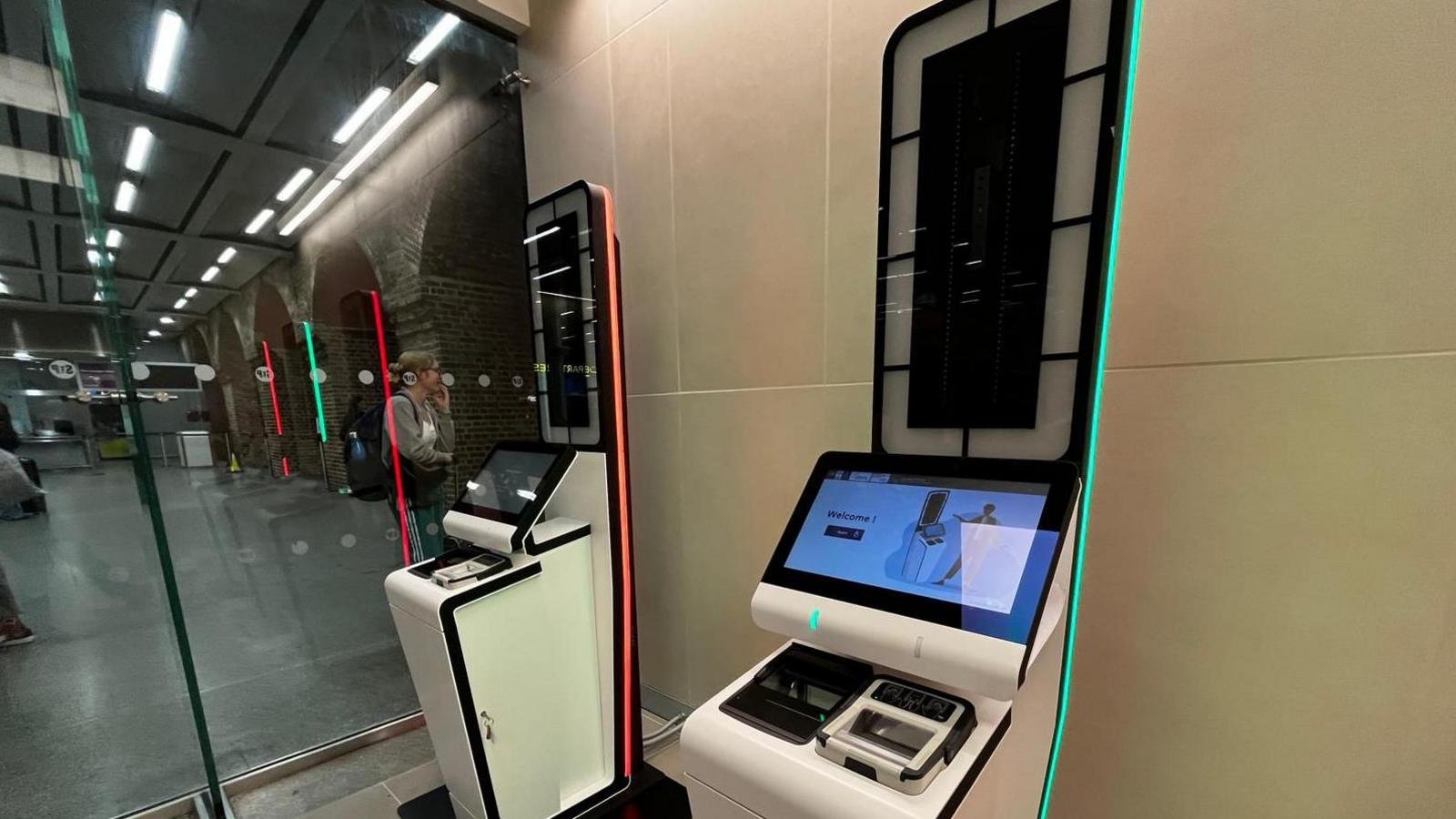
You complete French border control in London St Pancras before boarding. First-time EES registration happens here, then you arrive in Paris ready to enjoy the parks.
- Assistance points in the departures hall
- Priority and family lanes at busy times
- Manual process available if kiosks are difficult
Eurotunnel Folkestone to Calais
French border control is completed before boarding in Folkestone. Rollout can be phased by vehicle type. Accessible lanes and staff assistance are available.
Ferries via Dover and other ports
You register with French border officers at the port before boarding. Ports provide assistance for passengers with reduced mobility and can arrange support from check-in to border control.
Flying to Paris
Air travellers usually complete EES on arrival in France. Paris airports offer assistance for visible and invisible disabilities. Book assistance in advance with your airline if possible.
Step by step: your first EES registration
- Join the correct queue. If you need assistance, tell a member of staff early and ask for a priority or accessible lane.
- Answer a short set of questions about your trip with the officer or at a self-service kiosk if available.
- Provide a facial image. Stand still while the camera captures your image.
- If aged 12 or over, place fingers on the scanner when asked. Under-12s are not fingerprinted.
- The officer completes checks and confirms your entry. Next time is quicker because you are already registered.
You may be able to provide some details in advance using a self-service system at the terminal or a mobile application if offered by the country of arrival or departure. You will always meet an officer to complete the process.
If you have crossed before
On later trips, your biometrics are already on file and officers verify them, which is quicker. In rare cases data may need to be captured again. Holders of biometric passports may be able to use self-service systems where available.
Documents and proofs to prepare
- Passports with enough validity for Schengen travel
- Return ticket and accommodation details for Disneyland Paris or nearby hotels
- Travel insurance information
- Disability evidence if you wish to request assistance or reasonable adjustments
- Carer documentation if your companion is travelling in a support role
France entry documents: 2025 update
- Medical insurance certificate that covers medical and hospital expenses and medical repatriation. GHIC/EHIC does not suffice for this requirement.
- Sufficient funds for the stay:
- With a hotel booking: €65 per person per day
- No hotel booking: €120 per person per day
- Staying with an invited host (attestation d’accueil): €32.50 per person per day
- Hotel reservation or attestation d’accueil, passport validity as above, and a return ticket (or funds to buy one).
Example: Family of 2 adults and 2 children, Friday–Monday (4 days) with hotel booking → €65 × 4 persons × 4 days = €1,040. Funds can be in a bank account; one traveller can hold funds for the whole group.
From 12 October 2025 you may be asked (Eurostar first, others following) to declare that you meet these conditions during EES processing.
What data EES collects and why
Each time you reach an external border, EES may collect and store:
- Data from your travel document (e.g., full name, date of birth)
- Date and place of each entry and exit, or a refusal of entry
- Biometrics: facial image and fingerprints (biometric templates are created and stored in a shared biometric service)
- Where applicable, information from the Visa Information System and the status of your ETIAS authorisation
Data are processed to manage borders efficiently, prevent irregular immigration, identify travellers who have exceeded permitted stay or used false identities, and to help prevent, detect and investigate serious crime within the legal framework.
If you refuse biometrics
If you refuse to provide fingerprints or a facial image when required, you will be refused entry to EES countries.
Your rights, retention and complaints
- Who can access: Border, visa and immigration authorities for checks; law enforcement under strict conditions. Carriers may only verify how many visa entries remain.
- Retention: Entries, exits and refusals kept for 3 years. Individual files kept for 3 years and 1 day from last exit or refusal. If no exit is recorded, up to 5 years from the end of the authorised stay. Certain family-member cases are kept for 1 year.
- Protection: Access is restricted and safeguarded; systems follow data protection by design and by default.
- Your rights: Request access, rectification, completion or deletion of data related to you via the competent authority of the country concerned.
- Complaints: You may complain to the national supervisory authority and, for EU agencies’ processing, to the European Data Protection Supervisor.
Checking your remaining days
Use a short-stay calculator to estimate how many days you have left under the 90/180 rule, or ask border officers. The calculator is a guide only and does not itself grant a right to stay.
If you overstay, national measures may apply. If you have evidence of unforeseen circumstances (e.g., hospitalisation), authorities can amend records.
Frequent traveller facilitation programmes
Some countries may run national facilitation programmes for frequent non-EU travellers. These can reduce document checks on arrival by providing officers with information about prior stays and refusals.
- Country-specific and optional; a privilege, not guaranteed
- Eligibility may include frequent travel, lawful prior stays, means to fund trips, and intention to leave on time
- Granted up to one year and renewable, often up to five years or until your document/visa/permit expires
- Revocable if eligibility changes; some agreements between countries may extend validity
Tips for SEN, autism and sensory needs
- Travel off-peak where possible and arrive early to avoid time pressure
- Use ear defenders and comfort items during waiting periods
- Ask for lights and sounds to be minimised where staff can adjust them
- Request a manual process if touch screens or scanners cause distress
- Carry a short card explaining your needs to show at the checkpoint
Wheelchair users and mobility aids
Border points have step-free routes and wider lanes. You can remain in your chair. If placing hands on a scanner is difficult, tell the officer and an alternative will be used or the reason recorded.
Children and families
Children under 12 are not fingerprinted. A quick facial image is usually taken. Families can stay together during checks. Bring snacks and activities for any waits.
After you cross the border
Once through French controls you travel as normal to Marne-la-Vallée Chessy station or your hotel. EES does not apply inside the parks.
Printable needs card
Show this card to staff at check-in and border control. Edit the text to match your needs, then print or keep a screenshot on your phone.
My name: __________________
I may need: extra time | quiet route | step-by-step instructions | to avoid kiosks | to stay with my companion
Conditions/needs: __________________
Contact/companion: __________________
Language: English / Français
Helpful French phrases
- Bonjour, j’ai besoin d’assistance s’il vous plaît. (Hello, I need assistance please.)
- Je préfère un contrôle manuel, pas la borne. (I prefer a manual check, not the kiosk.)
- Pouvez-vous parler lentement, étape par étape. (Please speak slowly, step by step.)
- Je voyage avec un accompagnant. (I am travelling with a companion.)
Frequently asked questions
- Is the new EES system disabled friendly
- Yes. Assistance and priority lanes are available in many locations. Officers can adapt the process and record an exemption if fingerprints are not possible.
- Will EES cater for people with SEN needs
- Yes. You can request a calmer route and extra time. Kiosks are not mandatory if they are unsuitable. Clear, step-by-step instructions are available on request.
- Do I have to use a kiosk
- No. If a kiosk is difficult, ask to complete the process with an officer.
- How long does it take
- First registration usually takes a few minutes. Future crossings are faster because your record is already in the system.
- Does EES affect my Disneyland Paris park tickets or disability access system
- No. EES only applies at the border. Park services are separate and will be arranged after you arrive.
Tip: save these phrases and the needs card on your phone or print them.
This page is for guidance only. Border staff make the final decision on the day. Procedures can vary by terminal during progressive rollout.