

Disneyland Paris planning
Disneyland Paris Easy Access Card: The Complete Guide for Disabled Visitors
If you are visiting Disneyland Paris with a disability or long-term condition, the Easy Access Card can make the day more manageable. This guide breaks down what it is, who it is for, how it works in real life, and how to plan around queues, energy levels, and sensory load.
Quick navigation
At a glance
Plan your first 2 hours for low-demand attractions while energy is highest, then use return times to build in rest breaks.
Ticket offer
Guests with disabilities may be eligible for a discounted admission option.

What is the Disneyland Paris Easy Access Card?
The Easy Access Card is designed for disabled guests and people with long-term medical conditions who need support in the parks, but who may not qualify for the Priority Card. It is built around making waiting more manageable rather than removing waiting completely.
In practice, the card often works as a timed return system. Instead of standing in a standard queue, you are given a return time and can wait elsewhere. This can reduce physical strain, anxiety, and sensory overload, especially during busy periods.
Eligibility and what documents to bring
Eligibility is based on recognised documentation. The safest approach is to arrive with more evidence than you think you will need, including anything that clearly supports the impact your condition has on mobility, stamina, queueing, or sensory tolerance.
Bring with you
- ID that matches your documents
- Relevant medical documentation
- Any supporting letters where applicable
- A screenshot or saved note of your needs (useful under pressure)
Practical planning
- Arrive early to reduce sensory stress
- Know where Guest Services is before you get there
- Plan a quiet break spot for each park
- Build a slower, realistic itinerary
How the Easy Access Card works on the day
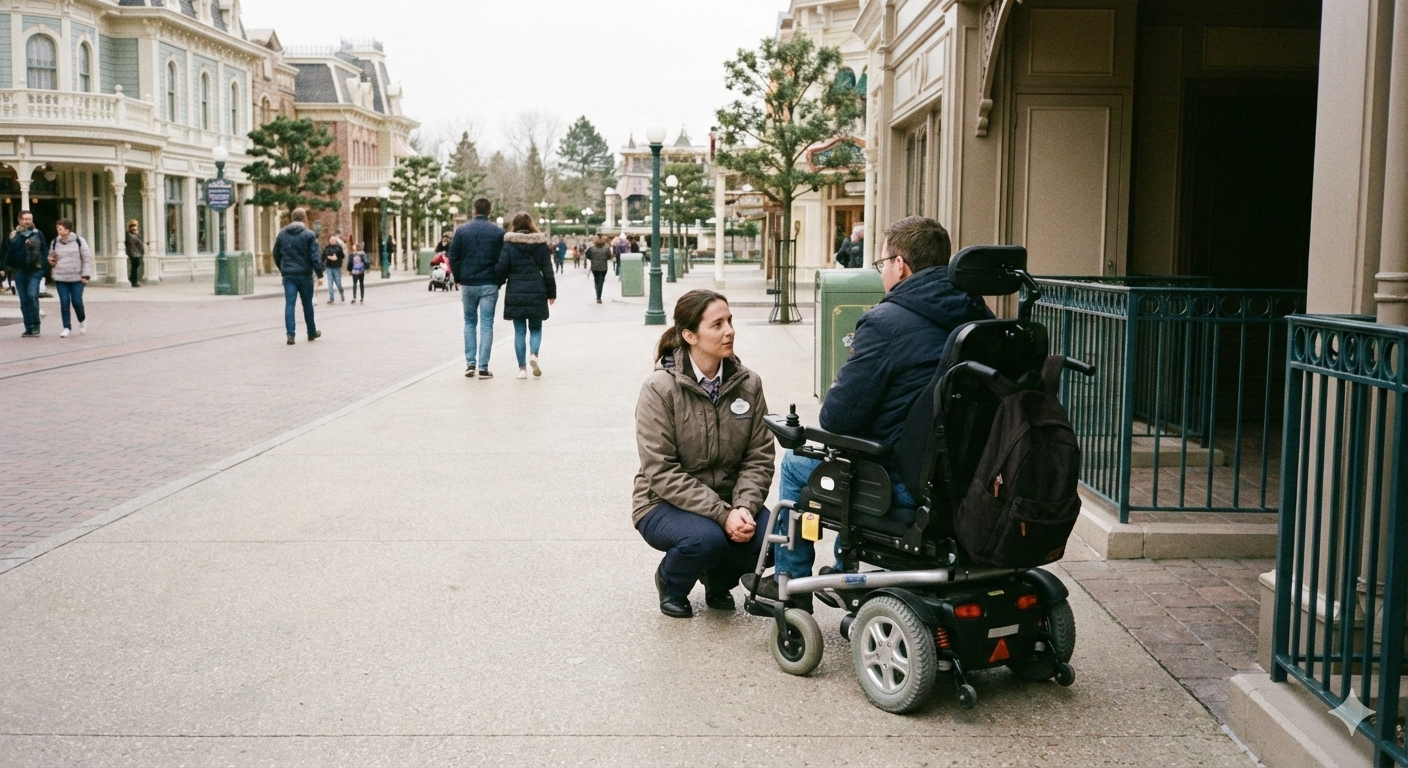
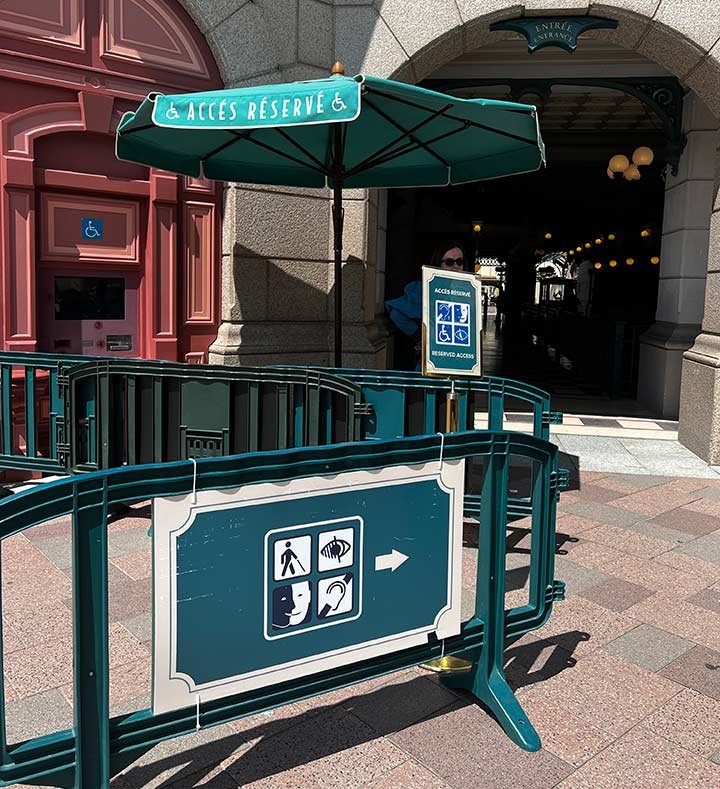
Once issued, you typically use the card at attraction access points or accessibility entrances. A Cast Member will confirm your party and provide instructions or a return time based on current demand.
The biggest win is flexibility. You can use return times to manage fatigue, medication schedules, food breaks, and regulation time for sensory needs. Treat it like a built-in pacing tool, not a fast pass.
On very busy days, return times can still be long. The difference is that you are not stuck in a crowded queue for that time.
Queues, rides, and what to expect
The Easy Access Card is most helpful when you plan your day around energy levels. Many disabled guests find that the morning is the best time for higher-demand attractions, then afternoons are better for shows, slower rides, and long breaks.
If your needs vary, you can adapt in real time. If queues feel too intense, switch to quieter areas, indoor walkthroughs, or shorter attractions. Your goal is consistency and comfort, not doing everything.
Frozen land at Disneyland Paris and accessibility
Frozen land is one of the most exciting additions for families planning ahead. Newer areas often introduce wider pathways and improved crowd flow, which can make a noticeable difference for wheelchair friendly movement and calmer navigation.
When you add Frozen land into your plan, treat it as a “single focus” land for part of the day, rather than trying to squeeze it in between major rides. That pacing approach can reduce stress for everyone in your group.

On-site hotels and staying on-site with a disability
Staying on-site can reduce the number of variables in your day. Shorter travel time, simpler transport, and easier access to rest breaks can be a major advantage when managing fatigue, pain, or sensory overload.
When booking, confirm the exact room layout and bathroom setup directly. If you need wheelchair friendly turning space or specific shower types, do not rely on standard room descriptions alone.
Easy Access Card FAQs
Is the Easy Access Card the same as the Priority Card?
No. The Priority Card usually offers more direct access. The Easy Access Card is typically based on return times and managed entry.
Do children need their own Easy Access Card?
If a child is eligible, they will usually need their own card. Bring the relevant documentation for the child as well.
Does the Easy Access Card remove all waiting?
Not usually. It typically changes where and how you wait, which is often the most important difference for disabled guests.
Can it help with shows and parades?
It can, but spaces may be limited. Arriving earlier than you would normally is still a good strategy.